The Part of Commercial Snow Removal Services in Leesburg, VA That Happens Before the Storm
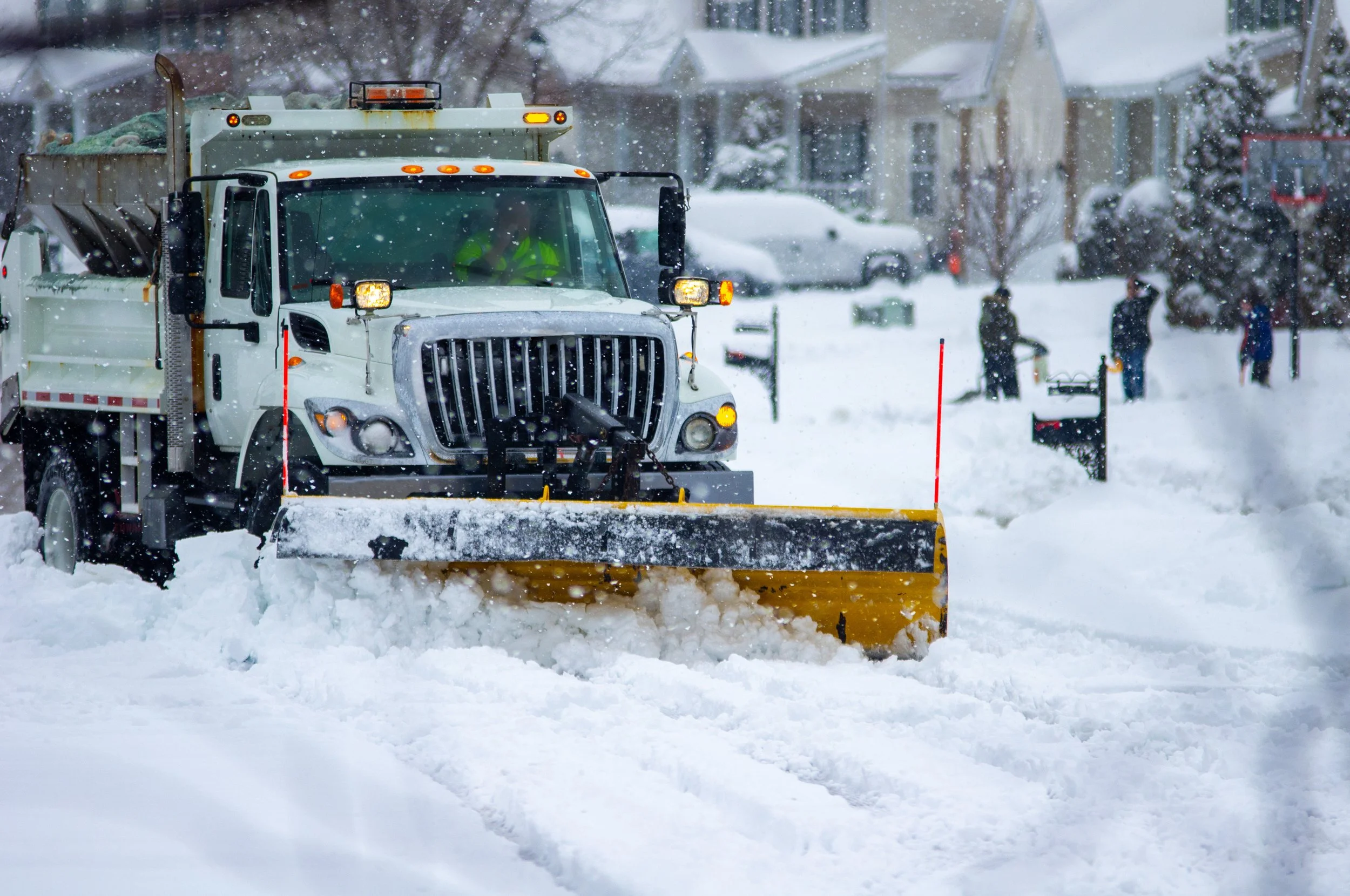
Most of the work behind commercial snow removal services in Leesburg, VA happens on a clear afternoon while the forecast is still a probability. The properties that come through a storm well are the ones treated before it arrived.
Pine Ridge Landscaping began with Keith, one man with a mower, and has grown into a SIMA-certified contract grounds business working across Loudoun County and the counties around it.
Plowing is the visible part of winter service and the easiest to price. Pre-treatment is the part that decides how much plowing is needed and what the surface looks like underneath it.
What Does Snow Pre-Treatment Do on a Commercial Property?
Snow pre-treatment lays down material before precipitation starts, so a brine or granular layer sits on the pavement when the first flakes land. That layer stops snow bonding to the surface, and a storm that cannot bond is a storm that scrapes clean.
Without it, the first accumulation melts against warmer pavement, refreezes, and forms a layer that a plow blade rides over. Our snow and ice management program treats that first hour as the one that governs the rest.
Why Is Pre-Treatment Worth It in Northern Virginia?
Pre-treatment pays off in Northern Virginia because the region hovers around freezing more than it sits below it.
Loudoun County storms frequently start as rain, turn over to snow, and then drop below freezing overnight, which is the sequence that produces sheet ice on a parking lot that looked merely wet at six in the evening.
A property treated in advance handles that transition. One that waits for accumulation gets a bonded layer and an early morning that costs considerably more to fix.
Which Commercial Surfaces Get Pre-Treated First?
Entrances, accessible parking and the routes leading from it get treated first, along with any walkway people cross between a vehicle and a door. Those are the surfaces where a fall happens and where a complaint originates.
Shaded edges deserve attention out of proportion to their size. The north side of a building and the strip behind a line of evergreens hold ice for days after the open lot has dried, and those are the places where a surface looks safe and is not.
Sloped drive approaches come next, because a vehicle that cannot climb an entrance blocks the entrance for everyone behind it. Open parking fields matter, but they rarely generate the first phone call.
Related: Winter-Ready Properties: Commercial Snow Plowing & Commercial Snow Removal in Arlington County, VA
What Happens After the Snow Stops on a Commercial Lot?
After the snow stops, plowing clears the bulk and post-storm treatment addresses what the blade leaves behind. A plowed lot still carries a thin compacted film, and that film refreezes as temperatures drop after the storm clears.
Timing is a judgment call during a long event. Clearing too early means doing it again, and waiting too long lets depth build past what a single pass can move, so crews work a property more than once during an extended storm rather than waiting for it to end.
Meltwater is another post-storm problem. Snow stacked uphill of a travel lane drains across it during the afternoon and freezes there at dusk, which is why stacking locations get chosen with the drainage in mind.
What Should a Property Manager Have Ready Before Snow Season?
A property manager should have a site map ready that marks stacking areas, drains, islands, curbs, bollards and anything else that disappears under snow. Crews working a property for the first time in a storm are working blind without it.
Equipment access is worth confirming in daylight too. Low canopy over a drive lane, a gate that needs a code, and bollards set close enough to catch a plow blade are all easier to find on a dry afternoon than at four in the morning under six inches of snow.
Settle contacts early as well: who at the property gets called during an event, and what service expectations apply to a site that operates outside normal business hours.
Set Commercial Snow Removal Plans for Your Leesburg, VA Property
Autumn is when stacking areas, site maps and treatment priorities are straightforward to agree, and mid-storm is when they are not. A plan settled now gives crews a clear first pass when the forecast turns.
Contact Pine Ridge Landscaping to walk a property you manage and set the winter snow removal plan before the first event.
In Summary
How far ahead of a storm does pre-treatment go down?
Pre-treatment goes down within the day before precipitation is expected. Applied too early it can be diluted by traffic or rain, and applied too late it has not had time to spread across the surface.
How does cold weather affect snow pre-treatment?
Pre-treatment loses effectiveness as temperatures fall, and below roughly fifteen degrees the material choice changes. Pine Ridge Landscaping selects the product against the forecast rather than using one material uniformly all winter.
What causes de-icing damage to pavement and landscape beds?
Over-application causes de-icing damage, both to concrete and to the planting at the edges of a lot. Rates are calculated for the surface area so material is not simply spread until it looks sufficient.
About the Author
In the heart of our community sprouts Pine Ridge Landscaping, a vibrant, family-owned business with roots deeply entrenched in the simple love for making things grow and creating landscapes that impress. It all began with Keith, a solo dreamer with a mower in hand and a vision in mind.